Research Overview
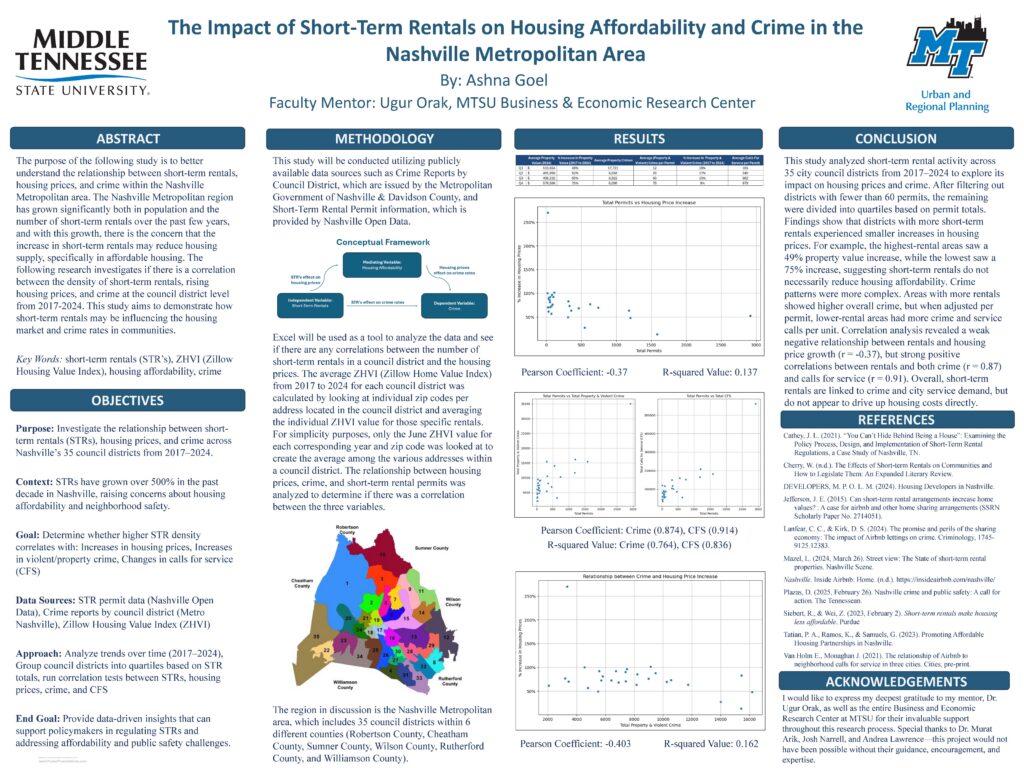

Short-term rentals, such as Airbnb properties, have rapidly increased in the Nashville area over the past decade. While they create economic opportunities and support tourism, they may also affect housing affordability and neighborhood safety. This project examines how the growth of short-term rentals is related to changes in housing prices and crime across Nashville’s council districts between 2017 and 2024. Using publicly available data from sources like Zillow and Nashville Open Data, the study analyzes trends in short-term rental permits, housing values, and different types of crime. The findings show that areas with more short-term rentals tend to experience larger increases in crime overall, although the relationship is complex and varies depending on how crime is measured. At the same time, the study finds only a weak relationship between the number of short-term rentals and rising housing prices, suggesting that other factors also play a major role in housing affordability. Overall, the results highlight that short-term rentals are one part of a broader set of changes affecting Nashville’s housing market and neighborhoods. The study emphasizes the need for thoughtful policies that balance economic benefits with community stability and safety.
Why it Matters
This project helps local communities better understand how short-term rentals may shape housing and neighborhood conditions in Nashville. By highlighting both potential risks and benefits, it can inform more balanced policies and planning decisions. Ultimately, the findings support efforts to maintain safe, stable, and affordable neighborhoods.
Project Outcomes
Learn More
To learn more about the study, contact the research team
Research Team
Primary Contact
Dr. Ugur Orak, Associate Professor, Department of Sociology and Anthropology
Additional Researchers
Ashna Goel, Undergraduate Student, Accounting
Community Partners
None
Research Focus
Geographic Scope
Nashville, TN
Interested in Collaboration?
Connect with the MTSU REACH Team
Contact MTSU REACH